Fluorescent, Fried, Fanged: The Chippy Counter Is Alt Britain’s Closing Ceremony
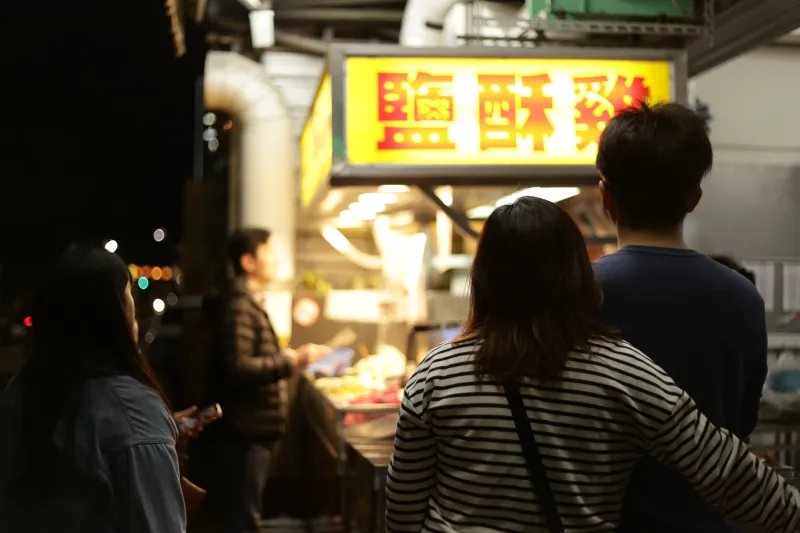
It’s 3:47am in Manchester and the queue is not for a club. It’s for a chip shop. The bass from the venue two streets back is still doing something to your ribs, but the real after-party has already started: a slow, shivering line of platform boots, smudged eyeliner and faux fur, all pointed at a counter under lights so unforgiving they could strip paint. This is the last room of the British alt night out, and it has a dress code nobody wrote down.
The Queue Is the Last Guest List
Every club has a door policy. The chippy has something better: a queue policy. No name on a list, no photographer, no whispered assessment from a person with a clipboard. Just bodies in order, swaying slightly, comparing orders and pretend-not-comparing outfits. The queue is where the night’s hierarchy dissolves. The person who got into the sold-out basement and the person who got turned away are standing in the same chip-scented air, waiting for the same vinegar.
In Leeds, Bristol, Glasgow and London, late-night fryers have become accidental anthropologists. They can read a night by what walks through the door at 4am: the PVC crowd, the wig crowd, the people who have been dancing so hard their jewellery has started to leave marks. One owner in Salford tells me he can tell which club a group has come from by their shoes. ‘The goths want chips with scraps. The pop girlies want cheesy chips. The ones from the warehouse night want everything and they want it fast.’
Fluorescent Is the Cruellest Light
Club lighting is a collaborator. It softens, flatters, hides the glue holding your lashes together. Chippy lighting is a witness. It finds every smudge, every ladder in your tights, every place where your lipstick has decided to migrate. And that is exactly why the chip shop matters: it is the final edit of your outfit, the place where the look has to survive without smoke and mirrors.
That is not a threat. It is a test, and the alt scene loves a test. Under those long white tubes, a good outfit stops being a costume and becomes a choice. The girl in the bin-bag corset is still a vision. The lad in the full-length coat is still giving Victorian ghost. The person who has been dancing in five-inch platforms for six hours is now sitting on a windowsill with a paper cone of chips, and they look more like themselves than they did all night. Style watchers call it ‘the chippy correction’ — the moment an outfit stops performing and starts belonging.
Salt, Vinegar, Communion
The counter is an altar with a card machine. You order, you wait, you are handed a warm polystyrene tray that immediately begins to steam. Then comes the ritual: salt, vinegar, maybe scraps if you know to ask, maybe curry sauce if you are braver than the average vamp. The first chip is shared. It always is. Someone offers the tray around and suddenly you are in a conversation with strangers about the DJ, the bus strike, the fact that it is 2026 and nobody can afford a taxi home.
The chippy is one of the last genuinely mixed rooms in Britain’s nightlife. Students, drag queens, shift workers, bouncers, people who have just finished a set and people who have just finished a breakup — all standing under the same menu board. There is no VIP area. There is no backstage. There is a bottle of vinegar with a crusty lid and a shared understanding that the night is not over until the chips are gone.
The Economy of the Last Hour
Late-night chip shops are infrastructure, not just takeaways. They keep the last hour of the night gentler: somewhere warm, somewhere lit, somewhere you can sit down and reassess your life before the first bus. In the middle of a cost-of-living squeeze, a £3 tray of chips is one of the few affordable luxuries left. For clubbers, it is also a safety net. A chippy is a place to wait, to charge a phone, to ask directions, to be seen by other people when the streets have gone quiet.
That makes the late licence a cultural issue, not just a business one. When councils talk about night-time economies, they tend to picture bars and venues. They should be picturing the fryer who stays open until the last straggler has been fed. The alt scene’s closing ceremony does not happen on a stage. It happens under a heat lamp.
What the Fryer Knows
The people behind the counter have seen the whole arc of the night. They have seen the first-date nerves, the group fallouts, the mascara running in the queue, the quiet joy of someone who has just kissed someone they liked. They do not judge. They salt. One Glasgow fryer tells me the best part of the job is the compliments: ‘They come in dressed like creatures. They tell me they love me. Then they ask for a single sausage and a can of Irn-Bru. It’s very honest.’
Honesty is the point. The chippy does not care about your scene points. It cares whether you want salt and vinegar. It is the great equaliser at the end of a night that has spent hours asking you to perform. And that is why, long after the club has switched on the house lights and the DJ has played the last song, the real final room is still open: fluorescent, fried, fanged, and waiting for you to step up to the counter.