The Human Thermostat: Alt Clubs Are Hiring Someone to Feel the Room
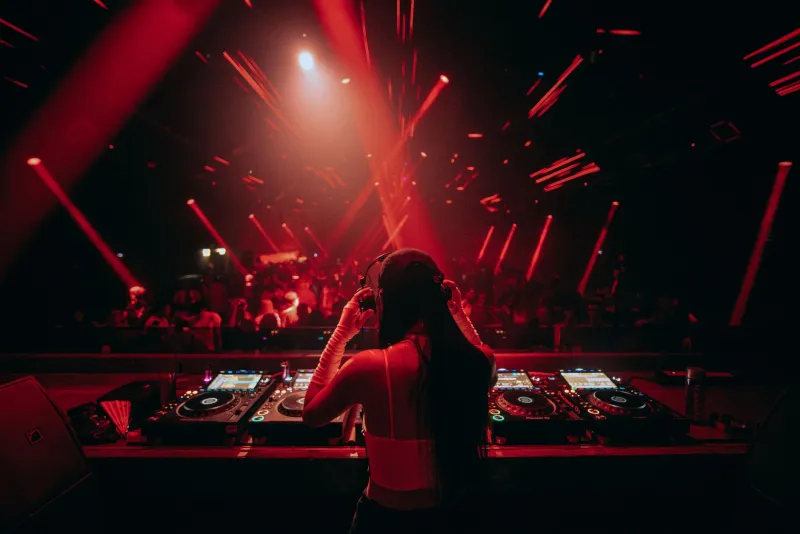
It’s 1am in a railway arch and the person in black is not the DJ, not the door, not the promoter. They are standing slightly to the side of the dancefloor with the expression of someone listening to a radio station only they can hear. They ask the lighting tech to pull the strobe down a notch. They clock a group getting too tight in the smoking area. They bring a glass of water to someone who has gone very still near the speakers. Then they vanish back into the crowd.
You have probably met this person without knowing their job title. Across UK alt venues — the basements, the arches, the upstairs rooms with the sticky carpet and the good sound — a new-ish role is taking shape. Call it the vibe manager, the atmosphere producer, the crowd care lead, the room reader. The label changes. The function is roughly the same: someone is being paid to feel the night on purpose.
The job nobody put on the flyer
On paper, it sounds like the most made-up job since “head of good times.” In practice, it is a strange hybrid of host, bouncer and therapist, with a bit of stage management chucked in. A good vibe manager knows where the queue is backing up, which corner is getting too hot, when the lighting has tipped from moody to hostile, and when the DJ needs to drop something softer before the floor turns. They are not there to police dancing. They are there to read the temperature.
This is not just a London thing. You can find versions of the role advertised in Manchester, Bristol, Leeds, Glasgow, Brighton — anywhere with a venue that has realised a good night is not just a good lineup. Alt crowds can be fiercely self-policing, but they are also carrying a lot: first nights out, gender stuff, sensory overload, sobriety, the general low hum of being in public in a body that gets looked at. A person whose actual job is to notice the wobble before it becomes a crisis is not a luxury. It is basic infrastructure.
Why the dancefloor needs a thermostat
Alt clubs are not ordinary rooms. The dress code is a language. The music is a mood. The smoking area is a debating chamber. That makes the atmosphere more precious and more fragile. A bad promoter can ruin a night with a bad soundsystem; a bad crowd can ruin it with one creep who everyone is too tired to challenge. The vibe manager is meant to be the person who steps in before either happens.
At their best, they are doing care work in real time. They notice the person on the edge of the floor who has lost their friends. They check the quiet room has water and a working lamp. They have a quiet word with the man who is dancing a bit too close. They know the difference between someone having a big night and someone having a bad one. They are not a replacement for trained welfare staff, proper security or a venue that takes consent seriously. But they can be the difference between a night that holds people and a night that spits them out.
There is a commercial logic here too. Venues are under pressure from licensing, insurance and the general British talent for making nightlife harder to run. A visible care role can help with all of that. But if the job is only about risk management, it becomes something else: a hall monitor in a nicer coat. The best versions are not about shutting things down. They are about keeping the room open.
The awkward bit: can you hire spontaneity?
Here is the friction. The whole point of an alt club is that it feels unmanaged. It is the place where the dress code is not a dress code and the night goes sideways in a good way. A job title can easily become a clipboard. If the vibe manager is hovering with a headset and a risk assessment, the room will feel it. Spontaneity does not survive being monitored.
So the role only works if it is built on trust rather than surveillance. That means paying people properly, training them in consent and mental health, giving them the authority to act and the backing to say no to a promoter who wants them to “just keep an eye” on a crowd of 600. It means understanding that emotional labour is labour. Reading a room for six hours is exhausting. Doing it while also being the only Black or brown or trans or disabled person on staff is another layer entirely.
The good ones are almost invisible. They are not the centre of the night. They are the person who asks “you alright?” in a way that does not sound like a challenge. They know the regulars. They know when to call a taxi, when to call a friend, when to call the door. They are not there to make the night happen. They are there to stop it falling apart.
The floor is still the boss
A vibe manager cannot manufacture a scene. They cannot make a room cool by adjusting the dimmer. The dancefloor is still co-authored by everyone on it: the DJ, the door, the cloakroom, the stranger handing out gum, the person who starts the chant, the person who leaves early because they have work. A job title can hold the door open. It cannot dance.
But it can protect the conditions for dancing. In a country that seems increasingly determined to make going out expensive, awkward and vaguely illegal, a role dedicated to care is not a joke. It is a quiet admission that atmosphere is not magic. It is work. And if Britain’s alt clubs want to keep their strange, sharp, sweaty little worlds alive, they might need to hire a few more people to feel the room — as long as they remember the room is not a machine. It is us.