The Marble Room Is Listening: Alt Britain’s Museum Nights Have a Class Problem
Photo: Unknown authorUnknown author, Public domain, via Wikimedia Commons
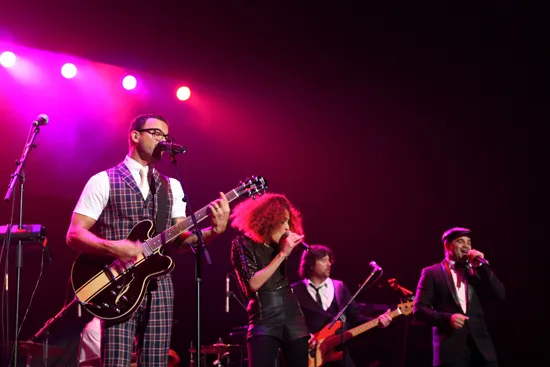
It’s 11:40pm and the floor is marble, not sticky. A DJ is tucked behind a plinth, the bass is bouncing off a vaulted ceiling, and a T-rex is doing its best impression of a bouncer. Somewhere near the cloakroom, a girl in a lace veil is arguing about whether the gift shop counts as a smoking area. This is the museum late opening, and it has become alt Britain’s most confusing new night out.
The appeal is obvious. Britain’s grassroots venues are being squeezed from every angle: rent, licensing, noise complaints, the slow death of the cheap pint. Museums, meanwhile, have space. They have heating. They have toilets that lock and a cloakroom that doesn’t smell of lost hope. They also have cultural capital coming out of their ears. For an institution desperate to prove it isn’t just a rainy-day prison for school trips, a late-night takeover looks like a lifeline. For a scene tired of damp basements and cancelled trains, it looks like a upgrade.
But a museum is not a neutral room with better acoustics. It is a landlord with a mission statement. And when the vampy crowd starts dancing under dinosaur bones, we need to be honest about what we’re trading the sticky carpet for.
From sticky carpet to scheduled precision
The first thing you notice at an institutional late night is the tidiness of the rebellion. The door times are strict. The bag search is thorough. The bar takes card only, and the queue for it snakes past a vitrine of Roman coins. There is a programme, often a panel talk, sometimes a ‘wellness room’ with beanbags. The whole thing ends at 1am because the staff need to get home and the insurance says so.
None of that is inherently bad. A night that ends before the first tube is a night that more people can actually attend. Good lighting in the toilets is a public service. A cloakroom with actual hangers is a small mercy. And there is something genuinely thrilling about hearing a bassline ricochet off a marble hall while a security guard pretends not to enjoy it.
But the club has always been a place where time gets bent. You lose the edge of the evening in a dark room; you find it again on the platform. The museum night does not let you lose it. It schedules the edge. It puts the edge on a timetable and gives it a last entry of 12:15am. That can feel less like a takeover and more like a school disco with better artefacts.
The door list is still a door list
Here is where the scene’s famous word-of-mouth ethos starts to wobble. Alt Britain has built its reputation on the idea that the best nights are the ones you hear about through a friend, a flyer, a stranger’s jacket patch. The museum night is the opposite: a newsletter, a ticket link, a members’ preview, a patron circle. The door policy is not a stern person in a leather jacket; it is a booking fee and a browser refresh.
That changes who gets in. A £30 ticket is not outrageous for a big institution, but it is not nothing. Add the train, the cloakroom, the drink prices and the fact that the last service home leaves before the DJ’s final track, and you have a night out that quietly selects for people with flexible jobs, central access and the kind of calendar that allows them to plan three weeks ahead. The 18-year-old who would have found their people in a scuzzy basement does not necessarily find them in a marble corridor with a bag search.
There is also the soft exclusivity of ‘curated’. When a museum programmes a night, it tends to programme the scene it can explain to a funder. That means the photogenic end of alt: the sharpest coats, the most archive-ready makeup, the people who look good next to a sculpture. It does not always mean the weirdest, the youngest, the loudest or the ones who make the room feel dangerous in the good way.
What the building remembers
We can’t pretend these buildings are blank. Museums are where Britain stores its stories about empire, extraction and who gets to be called civilised. Some collections are breathtaking. Some are a receipt. Dancing under a dinosaur is one thing; dancing under an object that was taken rather than bought is another. If the alt scene is going to use these rooms, it should ask what the room is already saying.
That doesn’t mean every late opening needs to be a teach-in. Nobody wants a lecture with their bass. But it does mean institutions can’t use the vampy crowd as a coolness laundering service. If a museum wants young, alternative audiences through the door, it should be transparent about its sponsors, pay the artists and performers properly, and offer free or pay-what-you-can tickets to local groups. It should let the scene curate, not just decorate. A T-rex is a brilliant backdrop. It is not an ethics policy.
The T-rex is not a mirrorball
The risk is that the museum night becomes a content farm. You can see it already: the branded photo opportunity, the ‘immersive’ corridor, the DJ told to keep it light because the sponsor’s guests are still in the room. The alt scene has always been good at making something out of nothing. Put it in a palace of culture and it might just make nothing out of something.
What makes a night sharp is not the backdrop. It’s the tension. The sense that the room could go anywhere. Museums are excellent at control. Clubs are excellent at losing it. The best late-night takeovers will be the ones that let a little of the latter leak into the former: dark corners, no photo walls, a cloakroom that feels like a confessional, a dancefloor where the security guard is not the most interesting person in the room.
So yes, let the alt scene take the marble halls. Let the bass bounce off the bones. Let the vampires see the dinosaurs. But let’s not confuse institutional access with safety, or polish with progress. The museum is listening. The question is whether it is listening to the scene or just to the ticket sales.
At 1:15am, the lights come up and the T-rex gets its coat. The crowd spills out into the wet British night, blinking under streetlamps, back into a country that is still deciding whether it wants them. The marble room was beautiful. But the platform is still the real test.