Fluorescent Communion: The 2AM Corner Shop Is Alt Britain’s Real Backstage
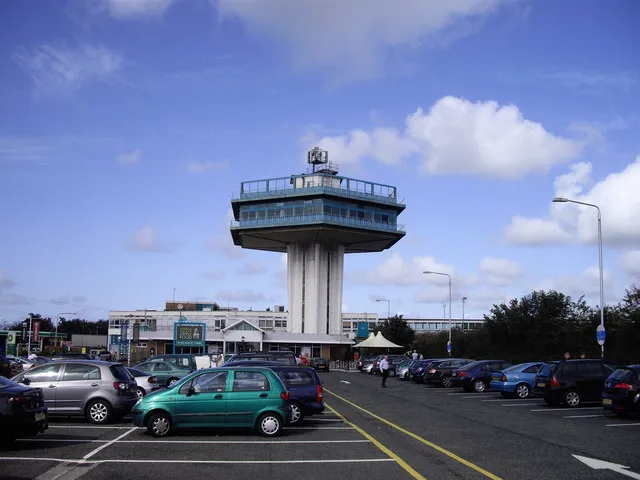
Photo: Benjamin Smith, CC BY-SA 4.0, via Wikimedia Commons
At 2:07am on a wet Saturday in Manchester, the queue outside the corner shop is longer than the one at the club. The bouncer has gone home. The cloakroom has dissolved into a group chat. The last track is still ringing in someone’s ears, and the night has moved one street over, under a sign that buzzes like a faulty amp.
This is the green room alt Britain never talks about. Not the painted one with the rider and the mirror, but the fluorescent-lit box between the freezer and the till, where the meal-deal geometry still applies even if the meal deal itself has clocked off. The club ends. The shop receives.
The route from dancefloor to crisp aisle
Every city has its own version. In Leeds, it is the 24-hour shop near the bus station, the one that sells phone chargers and frozen pizza and knows exactly what a group of wet-coated goths looks like at 3am. In Glasgow, it is the forecourt on the walk home, all protein bars and petrol fumes. In Bristol, it is the little Co-op that becomes a debating chamber for three people arguing about whether the night was good or just long. In London, it is the Tesco Express that has seen more eyeliner than the venue.
The route is ritual. You leave the club in a loose herd. Someone needs cash. Someone needs water. Someone needs to tell everyone about the thing that happened at 1:40am, and the pavement is too wide and too public, so you go inside. The door chimes. The air is warm and slightly stale. The fridge hums. And suddenly you are all standing in a line, sobering up in stages, holding a can of something orange.
Shopkeepers know. “They come in groups,” says one keeper in Leeds, who asks not to be named because he is not in the business of being a character in someone’s night out. “They are polite. They buy ice cream in November. They say sorry for everything.” He pauses. “I like them. They are better than the Friday men.”
Fluorescent truth serum
The corner shop is the most honest room in the alt scene because nobody is performing for a promoter. There is no door policy, no guest list, no photographer. The lighting is unforgiving and the mirror by the lottery counter is a war crime. You see the night as it actually was: smudged eyeliner, tired legs, a friend who has gone quiet, a stranger who has become a friend because they shared a bag of crisps.
This is where the debrief happens. Not the curated one posted at noon, but the real one, between the freezer and the till. Who snogged who. Who was creepy. Who DJ’d a set so good it made the room feel like a church with a smoke machine. Who is never coming back to that venue because the bar staff were rude. The conversation is messy and unfinished, which is why it is true.
There is also a practical intimacy to it. The club is loud; the shop is quiet. The club asks you to be a silhouette; the shop asks you to find your oyster card. You help a stranger reach the top shelf. You split a pack of gum. You wait while someone counts coins. The vampire myth is all about thresholds, and this is the last one before home: the door that chimes, the mat that says THANK YOU, the cold air again.
A third space with a freezer
Alt Britain loves to mourn its lost venues. Fair enough. But the scene does not only run on stages. It runs on the cheap, unglamorous infrastructure that lets people stay out later than they should. The night bus. The kebab shop. The corner shop. These are not footnotes to nightlife; they are the social safety net of it.
In 2026, that net is fraying. Late-night licences are expensive. Shoplifting panic has made some shops lock everything down. Staff are stretched. The 24-hour shop is becoming a rare thing in some towns, and the forecourt is replacing it with brighter lights and higher prices. When those places go, the afterparty goes with them. Not the official afterparty — the real one, where nothing is booked and everyone is welcome.
The corner shop is a third space with a freezer. It is accessible. It does not require a ticket or a round of drinks. It does not care if you are dressed for the club or for the walk of shame. It is, in its own fluorescent way, progressive: a room where the only currency is a bit of patience and the price of a Lucozade.
So next time you are in the queue at 2am, look around. The night is not over. It has just moved to the crisp aisle, and the conversation is better there.