Fangs Sharpened After Midnight: The Alt Barbers Working the Graveyard Shift

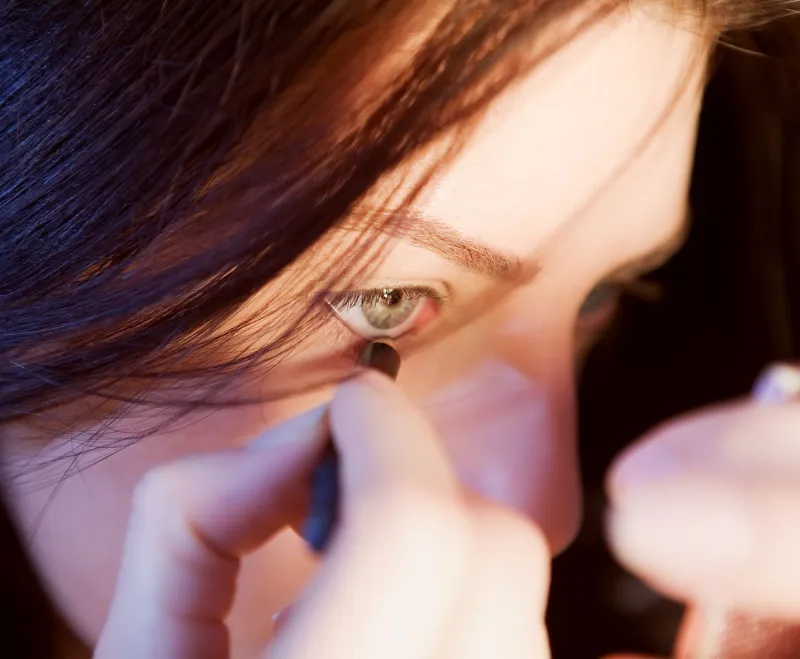
Photo: alt barber cutting hair at night neon barbershop interior, via i.pinimg.com
There is a particular hour in the British night out when everything goes soft at the edges. The bass has started to feel like weather. Your eyeliner has staged a quiet coup. The kebab shop queue is heaving, the night bus is a rumour, and the only thing standing between you and full structural collapse is a mirror you don’t trust. For a growing number of alt Britain’s club crowd, that mirror now lives in a barber’s chair — at 1:40am, with the door propped open and the clippers still warm.
The chair after the last dance
Late-night alt barbers are exactly what they sound like: independent shops in cities like London, Manchester, Leeds, Glasgow and Bristol staying open past midnight, often past 2am, offering fades, colour top-ups, dry trims and the kind of emergency fringe surgery that only becomes necessary when you catch your reflection in a phone screen outside a club. They are not trying to compete with the daytime barber experience. There is no scented hot towel ceremony, no Radio 2 murmur, no bloke in the corner explaining crypto. Instead, there is low lighting, a playlist with teeth, and a mirror that has seen things.
The appeal is practical first. A dry trim at 2am is not vanity; it is maintenance. If you have spent three hours in a room where the humidity is essentially a second skin, your hair has become a different entity. A colour top-up on a bleach job can mean the difference between arriving at the after-party looking like a vampire and arriving looking like a warning label. The late-night chair is a style checkpoint, a place to be reassembled before the next leg of the night — or before the long, tragic crawl to the night bus.
Why the fade waited until closing time
The rise of the after-dark chair says something about how alt Britain’s nights have changed. Clubbing has become more curated, more expensive and, in many cities, more daytime-adjacent. Sober and sober-curious nights have shifted the rhythm. People are arriving later, leaving later and treating the hours around midnight like a second morning. The barber has followed the crowd, not the other way round.
There is also the queerness of it. Many of these shops are explicitly inclusive: gender-neutral pricing, quiet slots, sensory-friendly lighting, no assumption that a fade belongs to one kind of face. The late-night barber is often a safer space than the club itself — a room where you can take your wig off, ask for a repair, or simply sit in a chair and be looked after without having to perform. In a night-time economy that still treats the smoking area as the sharpest room in the building, the barber’s chair is giving it a run for its money.
A checkpoint, not a pit stop
What makes the late chair different from a 24-hour gym or a kebab shop is the conversation. The barber is a captive audience, and so are you. In the same way that the cloakroom queue became a confessional, the 2am trim has become a place to say the things you would not say on a dancefloor. People talk about their exes, their bosses, their gender, their rent. The clippers provide a kind of permission. You cannot leave mid-sentence when someone is shaping your sideburns.
That is why the best late-night alt barbers feel less like a service and more like a social space with scissors. There is a rhythm to it: the door, the coat, the mirror, the small talk, the quiet bit, the payment, the goodbye. It is the last structured moment of the night before the unstructured mess of the journey home. For anyone who finds the club too loud or the house party too intimate, it is a place to land.
The economics of moonlighting
None of this is easy money. Staying open until 3am costs in staffing, safety and sleep. Some shops run late nights once a week; others are appointment-only after 11pm, with a deposit that separates the serious from the merely tipsy. The pricing is usually transparent, the slots are usually short, and the vibe is usually enforced with a firm hand. No drinks, no drama, no bringing the club in with you.
But the demand is real. In a cost-of-living crunch, a £15 dry trim at midnight can feel more sensible than a £15 cocktail. It is a small luxury with a visible result. It also keeps money in the hands of independent shops rather than the big chains. The late-night chair is part of a wider shift: alt Britain’s nightlife is splintering into smaller, weirder, more local rooms — and the barber is one of them.
What the moonlight says about us
There is something very vampire-coded about a shop that opens when the rest of the street goes dark. The mirror, the scissors, the low light, the invitation to be remade before dawn. But the real story is not the aesthetic. It is the fact that alt Britain keeps finding new ways to look after each other after midnight. The late-night barber is not just cutting hair. It is holding the night together, one fade at a time, until the first bus hisses into view.